Big personality, tiny package — here’s everything you actually need to know before (or after) bringing a Chihuahua home.

The world’s smallest dog breed, with one of the biggest personalities.
Let’s be honest — Chihuahuas get a bad rap. People picture a yappy little dog trembling in a purse, and they completely miss what makes this breed so special. Having spent years around Chihuahuas (and helping thousands of readers find ethical breeders through our directories), we can tell you this much: once you understand real Chihuahua breed characteristics, you’ll see why this tiny dog has such a massive, loyal fanbase.
This guide breaks down what a Chihuahua actually is, how the breed stacks up in a Chihuahua vs other breeds comparison, and gives you a no-nonsense Chihuahua care guide for beginners — plus everything you need to know about Chihuahua puppy care in those critical early months.
1. Chihuahua Breed Characteristics: What Makes This Breed Unique
Named after the Mexican state of Chihuahua, this breed is believed to descend from the Techichi, a companion dog kept by the ancient Toltec civilization. Despite their tiny frame, Chihuahuas are famous for a personality that punches way above their weight class.
Physical Traits
- Size: Typically 6–12 lbs and 5–8 inches tall — small enough to travel almost anywhere with you.
- Coat types: Smooth-coat (short, sleek) and long-coat (soft, flowing fur that needs more brushing).
- Head shape: The signature “apple head” (rounded skull) is the AKC breed standard; “deer head” Chihuahuas have a flatter, longer snout and are common but not show-standard.
- Color variety: One of the most color-diverse breeds — fawn, chocolate, black, cream, blue, white, and countless mixed patterns.
- Molera: Many Chihuahuas are born with a soft spot on the skull (similar to a human infant’s fontanelle), which usually closes with age but requires gentle handling in puppies.
Temperament
- Fiercely loyal — Chihuahuas often bond intensely with one primary person (“Velcro dogs”).
- Alert and vocal — they make excellent watchdogs and will absolutely let you know when someone’s at the door.
- Confident, sometimes bossy — many Chihuahuas act like they weigh 80 pounds, not 8.
- Affectionate — they crave warmth and closeness, quite literally (expect them under your blanket).
- Wary of strangers — early socialization matters more for this breed than almost any other.
2. Chihuahua vs Other Breeds: How Do They Really Compare?
If you’re deciding between a Chihuahua and another small or mid-size breed, here’s an honest, side-by-side look. We’ve included two breeds people frequently compare Chihuahuas to — the Dachshund and the German Shepherd — to show the full size and lifestyle spectrum.
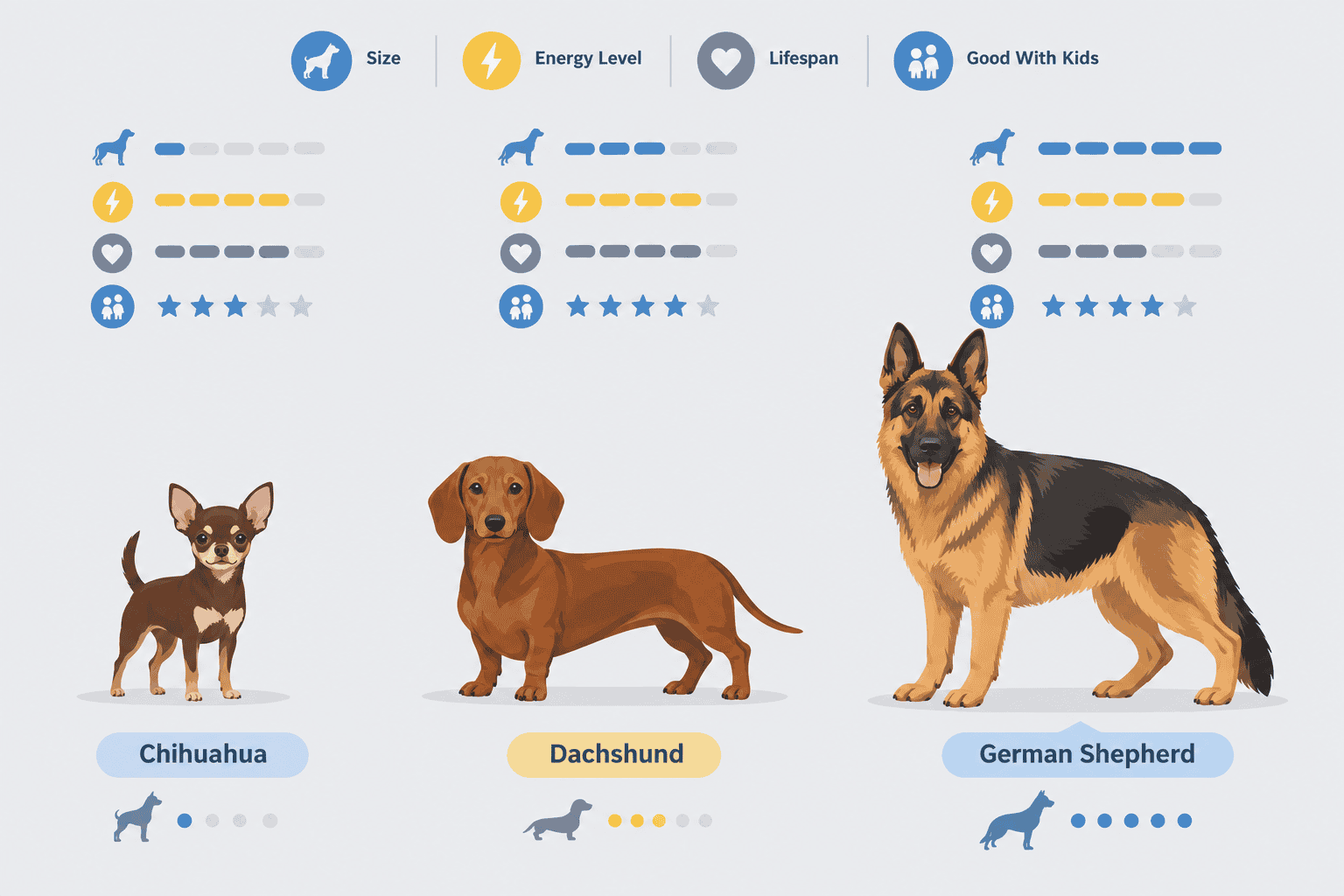
Size, energy, and lifespan vary dramatically across breeds — know what you’re signing up for.
| Trait | Chihuahua | Dachshund | German Shepherd |
|---|---|---|---|
| Average weight | 6–12 lbs | 16–32 lbs | 50–90 lbs |
| Lifespan | 14–18 years | 12–16 years | 9–13 years |
| Exercise needs | Low-moderate (20-30 min/day) | Moderate | High (1+ hour/day) |
| Apartment-friendly | Excellent | Good | Poor-moderate |
| Grooming | Low (smooth) / Moderate (long-coat) | Low-moderate | High (heavy shedder) |
| Good with young kids | Yes, with gentle kids | Moderate | Good with training |
| Trainability | Moderate (stubborn streak) | Moderate (stubborn) | Excellent |
| Cold tolerance | Very low — needs sweaters/coats | Low-moderate | High |
Why People Choose Chihuahuas Over Bigger Breeds
- Portability: They fit in a carrier and travel easily — a huge plus for apartment dwellers and frequent flyers.
- Lower food and vet costs: Smaller bodies mean smaller food bills and typically lower medication dosing costs.
- Longevity: Chihuahuas are among the longest-lived dog breeds, often reaching 15-18+ years with good care.
- Big-dog personality without big-dog space requirements.
Where Chihuahuas Fall Short Compared to Other Breeds
- Less physically resilient with toddlers or very young children (fragile bones, easy to injure).
- Can develop “small dog syndrome” — bossiness or reactivity — without consistent training.
- Prone to dental issues due to their tiny jaw structure.
- Not a natural fit for cold climates without extra protection.
3. Chihuahua Care Guide for Beginners
New to the breed? Here’s the practical, no-fluff rundown every new Chihuahua owner should know.
Feeding
- Feed a high-quality small-breed formula — Chihuahuas have fast metabolisms but tiny stomachs, so 2-3 small meals a day works better than one large meal.
- Watch portions closely — even a few extra ounces of food is a big deal on a 6-pound frame. Obesity is one of the most common health issues in the breed.
- Keep fresh water available at all times; small dogs dehydrate faster.
Grooming
- Smooth-coat: Weekly brushing, occasional bath (every 3-4 weeks).
- Long-coat: 2-3x weekly brushing to prevent mats, especially behind the ears and on the “britches.”
- Brush teeth several times a week — dental disease is extremely common in this breed due to jaw size and crowded teeth.
- Trim nails every 3-4 weeks; overgrown nails affect their tiny gait more than in larger dogs.
Exercise & Enrichment
- 20-30 minutes of activity daily — short walks, indoor play, and mental stimulation (puzzle toys) go a long way.
- Avoid overexertion in extreme heat or cold; Chihuahuas overheat and get chilled quickly.
- Socialize early and often to prevent the “yappy” stereotype from becoming reality.
Common Health Concerns to Watch For
| Health Issue | What to Watch For | What to Do |
|---|---|---|
| Dental disease | Bad breath, red gums, loose teeth | Daily brushing, annual vet dental checks |
| Luxating patella | Skipping, hopping, or limping on a hind leg | Vet exam; weight management; surgery in severe cases |
| Hypoglycemia (esp. puppies) | Lethargy, shaking, weakness | Frequent small meals; keep sugar source on hand for emergencies |
| Tracheal collapse | Honking cough, especially with excitement | Use a harness instead of a collar; avoid excess weight |
| Molera (soft skull spot) | Visible soft area on top of head (mostly puppies) | Handle head gently; usually closes with age |
4. Chihuahua Puppy Care: The First 12 Months
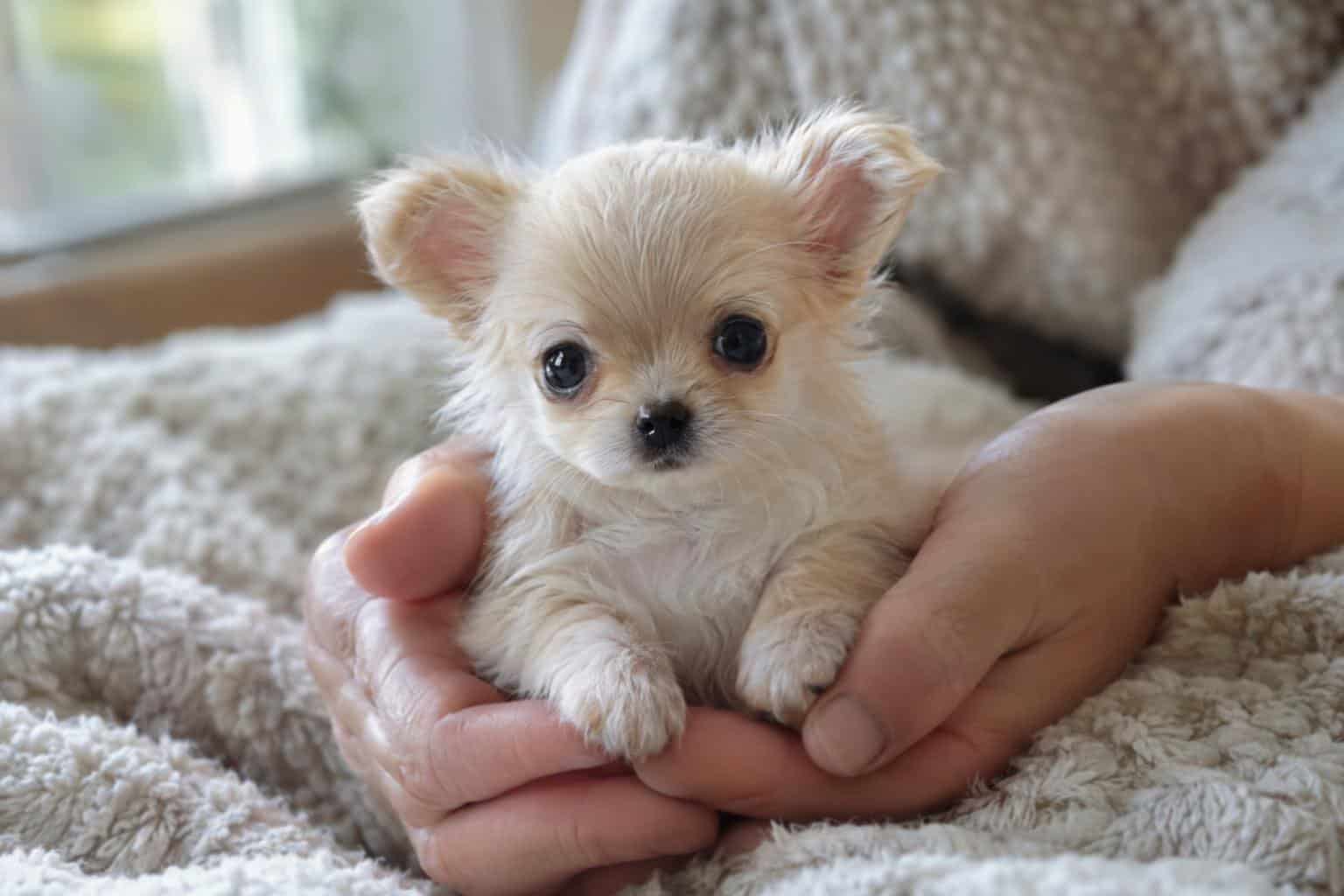
Chihuahua puppies are fragile — extra care in the first year sets the tone for life.
Chihuahua puppy care requires more caution than most other breeds simply because of how small and delicate puppies are. Here’s what matters most in year one.
Chihuahua Puppy Care Checklist
- Feed small, frequent meals (3-4x/day) to prevent hypoglycemia — a real risk in toy-breed puppies.
- Keep the home puppy-proofed — Chihuahua puppies can be injured jumping off furniture or being stepped on.
- Start socialization between 8-16 weeks — expose them (safely) to new people, sounds, and gentle dogs.
- Begin crate training and potty training early; Chihuahuas can be notoriously stubborn about housebreaking.
- Handle the molera (soft skull spot) with care until it closes, typically by 6-9 months.
- Schedule the full puppy vaccination series and a vet wellness check within the first week home.
- Keep puppies warm — they lose body heat fast and can’t regulate temperature as well as adult dogs.
- Avoid harsh corrections; Chihuahuas respond far better to positive reinforcement training.
- Choose a harness over a collar early on to protect the trachea.
- Only buy from an ethical, verified breeder — avoid puppy mills and unverified online sellers.
Puppy Milestones at a Glance
| Age | What’s Happening | What You Should Do |
|---|---|---|
| 8-12 weeks | Adjusting to new home, teething begins | Start gentle socialization, potty training routine |
| 3-4 months | Vaccination series continues, rapid growth | Small frequent meals, first basic obedience cues |
| 6-9 months | Molera typically closes, adult teeth in | Spay/neuter discussion with your vet, dental care routine |
| 9-12 months | Approaching adult size | Transition to adult food, settle into adult routine |
5. Is a Chihuahua Right for You?
Chihuahuas are a fantastic fit for apartment dwellers, singles, seniors, and families with older, gentle children who understand how to handle a small dog safely. They’re not the best match for households with toddlers, very active outdoor lifestyles, or anyone looking for a low-maintenance-training breed.
Final Thoughts
Understanding real Chihuahua breed characteristics — not the stereotypes — is the first step to being a great Chihuahua owner. Whether you’re comparing Chihuahuas vs other breeds, prepping for your first Chihuahua puppy, or just brushing up on care basics, the bottom line is this: this tiny breed delivers an outsized amount of love, loyalty, and personality for the space (and heart) it takes up.