
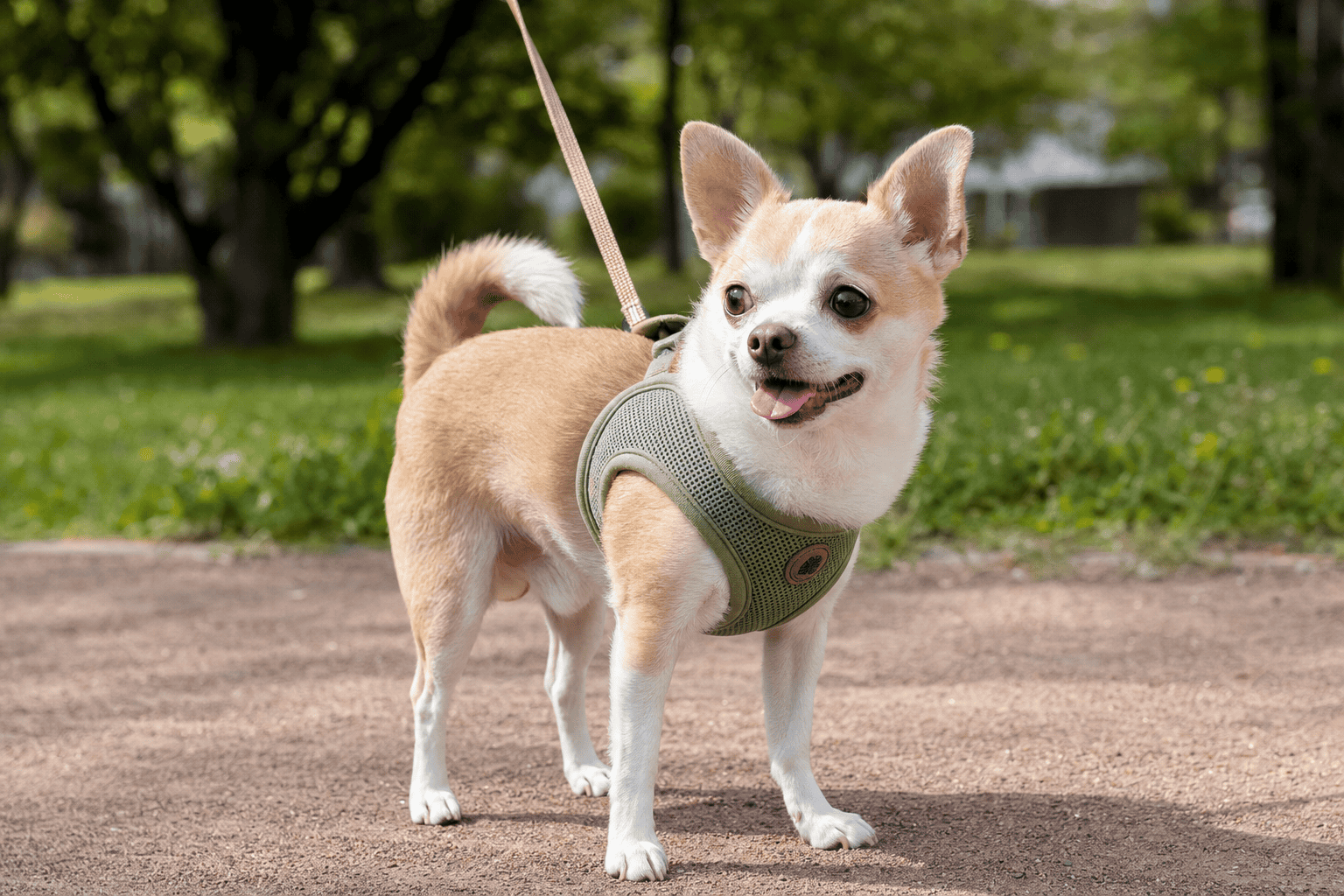
If you own a Chihuahua, you already know they’re not “just a small dog” — they’re a tiny, delicate-boned, big-personality package that needs gear built specifically for their body, not a scaled-down version of a Labrador harness. Choosing the best harness for Chihuahuas isn’t just about comfort — for this breed, it’s genuinely a health and safety issue. Get it wrong, and you risk tracheal damage, escape artistry, or a harness that rubs and chafes. Get it right, and daily walks become stress-free for both of you.
This guide covers exactly what type of harness is best for Chihuahuas, how to nail the sizing, and what other variables actually matter when shopping.

Why Chihuahuas Need Special Harness Consideration
Chihuahuas have a few anatomical quirks that make harness choice more critical than it is for most breeds:
- Fragile tracheas — Many Chihuahuas are prone to collapsing trachea, a condition where any pressure on the neck (like a collar-only leash) can trigger coughing, gagging, or long-term damage
- Small, narrow chests — Standard “small dog” sizing often still runs too big; Chihuahuas frequently need XXS or XS sizes that many brands don’t even stock
- Escape-prone body shape — Their narrow heads and necks mean a poorly fitted harness can literally be backed out of with a good wiggle
- Delicate skin — Thin fur (especially on short-haired Chihuahuas) means poor materials or seams can chafe quickly
What Type of Harness Is Best for Chihuahuas?
Not all harnesses are created equal. Here’s how the main styles stack up specifically for this breed.
1. Step-In Harness
Best for: Easy daily use, calmer Chihuahuas
- Dog steps into two leg holes, and it clips together on the back
- No need to lift paws over the head — great for Chihuahuas who hate the “pull over the ears” motion
- Downside: slightly easier for a determined escape artist to wiggle out of if not snug
2. Vest (Wrap-Style) Harness
Best for: Most Chihuahuas, especially anxious or cold-sensitive ones
- Wide, padded panel distributes pressure across the chest rather than a single strap
- Reduces strain on the throat and shoulders — ideal for a breed with tracheal sensitivity
- Often has a soft fleece or mesh lining, which doubles as light warmth for a breed that gets cold easily
- Our top overall recommendation for most Chihuahuas
3. H-Back Harness
Best for: Active or athletic Chihuahuas, warm climates
- Two straps form an “H” shape across the back and chest
- Excellent airflow — good for warmer climates or dogs prone to overheating
- Slightly less secure against escape than a full vest style, so double-check the girth fit
4. No-Pull / Front-Clip Harness
Best for: Chihuahuas that pull on leash
- Front chest clip discourages pulling by redirecting the dog’s momentum sideways
- Can be combined with a back clip (dual-clip design) for regular walks vs. training walks
- Not usually needed for most Chihuahuas since they’re small enough that pulling isn’t a strength contest, but useful for stubborn pullers
Quick Comparison Chart
| Harness Type | Escape Resistance | Airflow/Cooling | Neck/Trachea Protection | Best For |
|---|---|---|---|---|
| Step-In | Moderate | Good | Good | Easy on/off, calm dogs |
| Vest/Wrap | High | Moderate | Excellent | Most Chihuahuas, anxious or cold dogs |
| H-Back | Moderate | Excellent | Good | Active dogs, warm climates |
| Front-Clip/No-Pull | High | Varies | Good | Dogs that pull |
Bottom line: For the average Chihuahua owner, a padded vest-style harness with a martingale-style tightening loop and both a back and front clip checks the most boxes — secure, comfortable, and protective of that sensitive throat.
Size Guide for Chihuahua Harnesses: How to Measure Correctly
This is where most owners go wrong — they guess based on weight alone, when chest girth is the single most important measurement.

Step-by-Step Measuring Instructions
- Get a flexible measuring tape (a fabric sewing tape works best; a string plus ruler works if you don’t have one)
- Measure the chest girth — wrap the tape around the widest part of the ribcage, just behind the front legs
- Measure the neck girth — wrap around the base of the neck, where a collar would normally sit
- Check the “two-finger rule” — you should be able to slide two fingers snugly under the strap; if you can fit a whole hand, it’s too loose, and if you can’t fit one finger, it’s too tight
- Weigh your dog — use weight as a secondary cross-check, not your primary sizing method, since two 6-lb Chihuahuas can have very different chest shapes (deep-chested vs. barrel-chested)
Chihuahua Harness Size Chart
| Size | Chest Girth | Neck Girth | Typical Weight |
|---|---|---|---|
| XXS | 10–12 in | 8–10 in | 2–4 lbs |
| XS | 12–14 in | 9–11 in | 4–6 lbs |
| S | 14–16 in | 10–12 in | 6–9 lbs |
| M | 16–18 in | 11–13 in | 9–12 lbs |
Note: Chihuahuas typically range 3-6 lbs (some up to 10-12 lbs for larger “deer head” types), so most will land in XXS-S. Always check the specific brand’s chart, since sizing varies significantly between manufacturers — a “small” from one brand can be an “XS” from another.
Signs Your Harness Doesn’t Fit Right
- Dog can back out of it with a shake or wiggle (too loose)
- Red marks, hair loss, or rubbing after walks (too tight or wrong material)
- Constant coughing or gagging during walks (pressing on the trachea — switch styles immediately)
- Harness twists or rides up/down during movement (wrong shape for your dog’s body type)
- Dog freezes, refuses to walk, or paws at the harness constantly (poor fit or bad material choice)
Other Variables That Matter Beyond Size and Type
1. Material
- Mesh/breathable fabric: Best for warm climates and short-haired Chihuahuas prone to overheating
- Padded fleece-lined: Best for cold-sensitive or thin-coated dogs, and for dogs with sensitive skin prone to chafing
- Nylon webbing: Durable but can be harsher on skin if not padded at contact points — check the underside quality, not just the outside
2. Adjustability
Look for harnesses with multiple adjustment points (chest strap AND neck strap, not just one). A single-adjustment harness is far more likely to fit “close enough” rather than “actually correct” — a bigger deal for a body shape as small and variable as a Chihuahua’s.
3. Reflective Strips or Bright Colors
Given how small and low-to-the-ground Chihuahuas are, visibility matters more than with larger breeds — reflective piping is a genuinely useful safety feature for evening walks.
4. Handle on Top
A sturdy top handle gives you quick control in crowded areas, near traffic, or around other dogs — genuinely useful given how easily a Chihuahua can be underfoot or overlooked by others.
5. Weight of the Harness Itself
Sounds obvious, but it’s easy to overlook: an overly bulky or heavy harness can feel disproportionately heavy on a 4-lb dog. Lightweight materials matter more here than on a 60-lb dog who won’t notice the difference.
Putting It All Together: A Simple Decision Checklist
- ✅ Measure chest girth (not just weight) using the two-finger rule
- ✅ Choose vest-style for most dogs; step-in for easy daily use; H-back for hot climates; front-clip if your dog pulls
- ✅ Prioritize a martingale-style tightening loop for extra escape security
- ✅ Choose breathable mesh or padded fleece based on your climate
- ✅ Confirm multiple adjustment points, not just one strap
- ✅ Look for reflective elements for visibility
- ✅ Reassess sizing every few months, especially with puppies who are still growing
Final Thoughts
The best harness for Chihuahuas isn’t a single specific product — it’s the right combination of type, size, and material matched to your individual dog’s body shape, activity level, and sensitivities.
Skip the “one-size-fits-most” assumption most big-box pet stores push, measure carefully using chest girth as your primary guide, and prioritize a design that protects that fragile little trachea. If you can accurately determine the best harness for Chihuahuas (especially MY Chihuahua), you’ll have a harness that keeps your Chihuahua secure, comfortable, and actually excited for walk time.